 Nirajan Dahal
More Than a Trek, a Journey of Responsibility
The Everest Base Camp (EBC) trek is more than a physical challenge or a bucket-list milestone – it is a transformative experience that takes trekkers deep into the heart of the Khumbu region, where the world’s highest peaks rise like silent guardians. Each year, over 40,000 trekkers from across the globe walk the winding trails that lead to the foot of Mount Everest, seeking awe, adventure, and personal triumph.
But this dream journey carries a shared responsibility. The Everest region is not just a playground for adventurers; it is home to fragile ecosystems, centuries-old Sherpa culture, and a delicate high-altitude environment that is increasingly vulnerable to human pressure. How trekkers behave on the trail today will determine whether future generations can experience the same majesty tomorrow.
This article – written with a decade of experience in sustainable travel writing and mountain research – is a comprehensive guide to trekking responsibly to Everest Base Camp. It explores the environmental and cultural challenges facing the region, provides actionable steps for trekkers, and highlights the real impact of tourism on the local economy and communities.
The Significance of the Everest Base Camp Trek
The EBC trek is often described as a pilgrimage for adventure lovers. Over the course of 12 to 14 days, trekkers traverse lush forests, suspension bridges, glacial valleys, and high-altitude passes, gradually acclimatizing as they ascend to 5,364 meters (17,598 ft) at base camp.
- Breathtaking Scenery: From the iconic Hillary Bridge to the mesmerizing views of Ama Dablam, Lhotse, and Nuptse, the trek is a photographer’s dream.
- Cultural Immersion: The route passes through Sherpa villages like Namche Bazaar, Tengboche, and Dingboche, offering a glimpse into Buddhist traditions, centuries-old monasteries, and local life.
- Economic Lifeline: Tourism accounts for 80% of local income in some Khumbu villages. The trek supports guides, porters, lodge owners, yak herders, shopkeepers, and artisans.
Yet, as with any destination experiencing rapid tourism growth, this popularity has consequences.
Environmental Challenges on the Trail
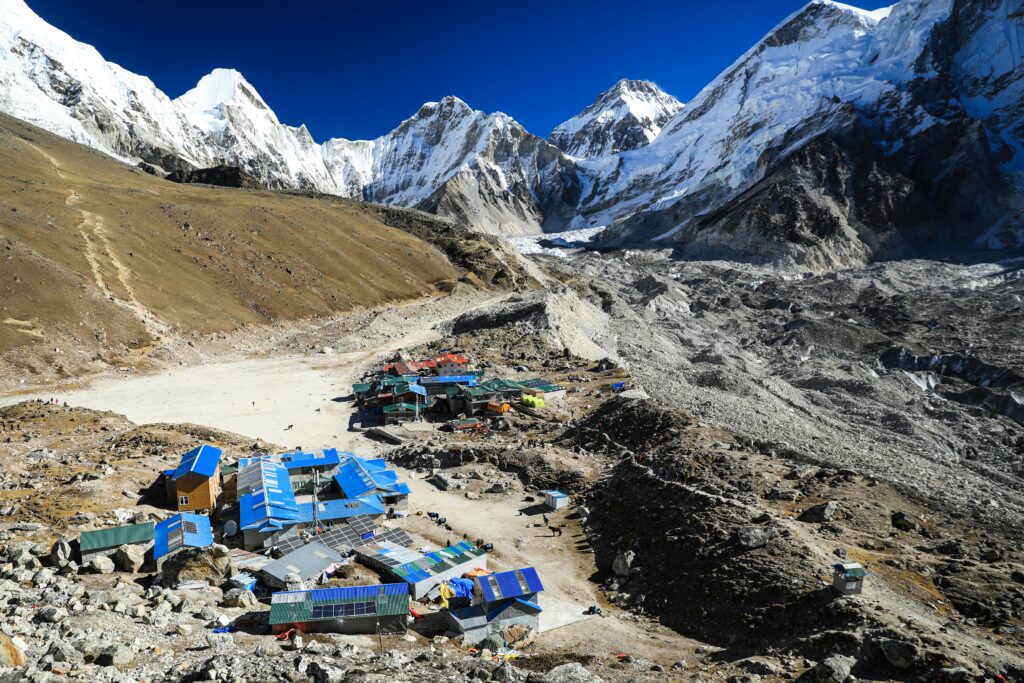
The Everest region, part of Sagarmatha National Park (a UNESCO World Heritage Site), is one of the world’s most ecologically sensitive zones. The high-altitude alpine ecosystem is slow to recover from damage, making human impact long-lasting.
1. Waste Accumulation
According to estimates by the Sagarmatha Pollution Control Committee (SPCC):
- Each trekker generates 6–8 kg of waste during their journey.
- Combined with porters, guides, and climbing expeditions, this adds up to over 100,000 kg of solid waste annually.
- Waste includes plastic bottles, food wrappers, tin cans, used batteries, human waste, and even abandoned gear.
Much of this waste is burned in open pits or left unmanaged, leaching microplastics and chemicals into glacial streams. In recent years, microplastic particles have been detected at 8,440 meters near the summit of Everest, highlighting how far pollution has spread.
2. Deforestation
Traditionally, locals relied on firewood for heating and cooking. Tourism demand has driven a surge in firewood consumption – leading to deforestation of slow-growing rhododendron and juniper forests.
- Tree line habitats are disappearing, threatening species like the Himalayan Monal (Nepal’s national bird).
- Soil erosion worsens when root systems vanish, causing trail collapses and landslides.
3. Trail Erosion and Overcrowding
Heavy foot traffic has widened paths by up to 40% in some sections. Shortcuts carved by trekkers damage vegetation and increase erosion. In peak season, trekkers may wait in queues on narrow trails, further stressing the ecosystem.
4. Water Source Contamination
Untreated human waste and garbage seep into water sources, risking outbreaks of waterborne diseases like dysentery and giardia. Villagers rely on the same streams for drinking and irrigation, making proper sanitation critical.
5. Climate Change Amplification
The Himalayas are warming three times faster than the global average. Glaciers are retreating at alarming rates, exposing decades of buried waste and threatening long-term water security for over 1.3 billion people downstream.
Positive Impacts of Trekking – When Done Right
Despite these challenges, trekking remains a powerful force for good if approached responsibly.
- Economic Growth: The trekking industry contributes millions to the local economy, helping build schools, hospitals, and micro-hydro power stations.
- Cultural Preservation: Revenue from tourism funds the restoration of monasteries and supports festivals like Mani Rimdu, keeping Sherpa traditions alive.
- Community Empowerment: Women and youth have gained leadership roles in tourism cooperatives and conservation groups.
Principles of Responsible Trekking
1. Prepare Before You Go
- Train Physically: Build endurance to avoid medical evacuations that strain local resources.
- Pack Light, Pack Right: Carry reusable bottles, purification tablets, and avoid excessive packaging.
2. Minimize Waste
- Carry In, Carry Out: Take back everything you bring.
- Avoid Bottled Water: Use filters, UV purifiers, or iodine tablets instead.
- Support Waste Programs: Pay park fees and SPCC waste deposit charges that fund clean-up efforts.
3. Respect Trails and Nature
- Stay on marked paths to prevent habitat destruction.
- Avoid picking plants or disturbing wildlife.
- Limit group size – smaller groups cause less damage and are easier to manage.
4. Be Culturally Aware
- Learn basic Sherpa greetings like “Tashi Delek.”
- Dress modestly near monasteries and remove shoes before entering.
- Ask before photographing locals.
5. Support Local Economy
- Hire local guides and porters (ensuring fair wages and proper equipment).
- Stay in family-run lodges and eat local meals to support village economies.
6. Conserve Resources
- Use solar chargers instead of diesel generators.
- Take shorter showers and avoid unnecessary firewood consumption.
Sustainable Trail and Waste Management Initiatives
Several programs are making a difference:
- Everest Cleanup Campaigns: Over 10,000 kg of waste was removed in recent government-backed campaigns between 2019–2023.
- SPCC Waste Fee: Trekkers pay a waste deposit, refunded when proof of responsible waste disposal is provided.
- Biogas and Solar Projects: Communities are switching to biogas and solar heating, reducing firewood dependence.
- Eco-Lodges: A growing number of teahouses use solar power and rainwater harvesting.
Choosing a Responsible Tour Operator
When booking your trek, look for operators that:
- Are certified by bodies like Travelife or Leave No Trace.
- Provide gear to porters and ensure ethical weight limits (no more than 20–25 kg per porter).
- Donate to local schools, clinics, or environmental projects.
The Call to Action
Every trekker, organizer, and policymaker has a role to play. The future of the Everest region depends on collective action:
- Trekkers: Carry out waste, respect trails, educate others.
- Operators: Commit to fair labor and low-impact practices.
- Governments: Invest in waste infrastructure, regulate numbers in peak season.
Conclusion: Guardians of the Himalayas
Trekking to Everest Base Camp is not just about reaching a destination – it’s about becoming a steward of one of Earth’s last great wildernesses. The roof of the world must be protected with care, respect, and foresight.
By following responsible trekking practices, you ensure that the snow-capped peaks, emerald forests, and warm Sherpa smiles endure for generations to come. Your footsteps can either harm or heal – choose to leave a legacy of preservation.