 Nirajan Dahal
Climate Change Is Making Food More Expensive Globally
Climate change is no longer just an environmental concern—it is reshaping economies, diets, and societies. A new study led by Maximillian Kotz of the Barcelona Supercomputer Center has revealed that extreme weather events between 2022 and 2024 caused dramatic spikes in food prices across the world, highlighting the urgent link between climate change and global food security.
Unlike earlier research that focused on long-term agricultural impacts, this study looked at short-term price shocks caused directly by extreme weather, including droughts, heatwaves, and heavy rainfall. The findings are stark: when climate disasters hit, food prices rise rapidly, sometimes beyond historical precedents.
Global Examples of Climate-Driven Food Price Surges
The study analyzed 16 cases across 18 countries and found alarming short-term disruptions:
- California & Arizona, USA (2022): Vegetable prices rose 80% in November 2022 compared to the previous year, after record heat and water shortages.
- South Korea (2023): A severe heatwave in August drove cabbage prices up by 70% in September.
- Europe (2024): Olive oil prices increased by 50% in January 2024 after prolonged droughts in Italy and Spain.
- Mexico (2024): One of the most severe droughts in a decade pushed fruit and vegetable prices up by 20%.
- Japan (2024): Rice prices soared by 48% after back-to-back record-breaking heatwaves, the worst since 1946.
- West Africa (2024): Ghana and Ivory Coast, which produce nearly 60% of the world’s cocoa, saw a devastating heatwave worsened by climate change. Cocoa prices skyrocketed by 280% in April 2024.
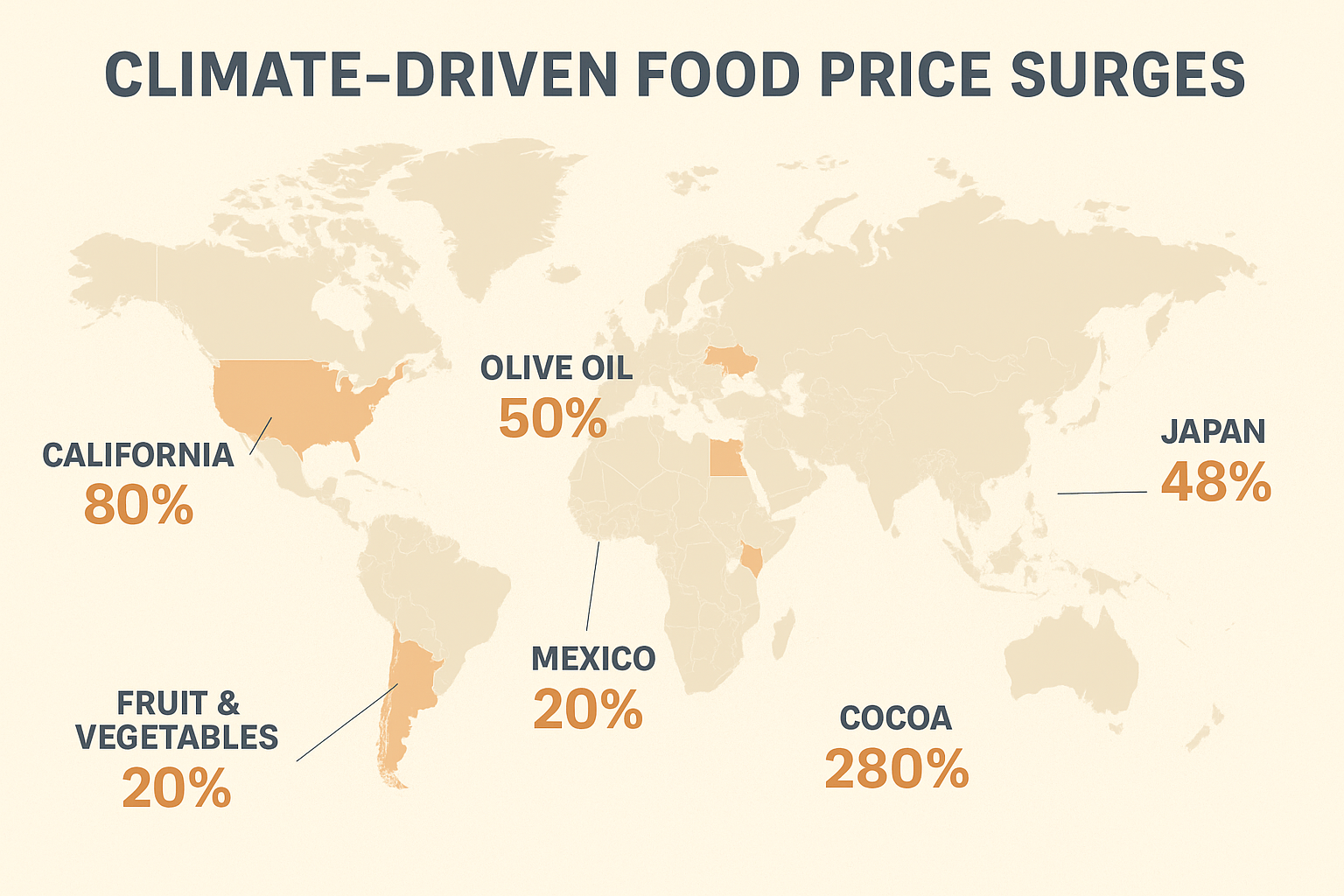
These figures underline how climate change is destabilizing global food systems—affecting everything from staple grains to luxury goods like chocolate and coffee.
Societal and Economic Risks of Climate-Driven Price Hikes
The researchers warned that higher food costs carry serious knock-on effects for society. Healthy foods like fresh fruits and vegetables often rise the most, forcing low-income households to rely on cheaper, less nutritious alternatives. This can worsen malnutrition and increase the risk of Type 2 diabetes, heart disease, and other health issues.
Moreover, extreme weather–driven food inflation contributes to broader economic instability. Rising grocery costs can fuel political unrest, social upheaval, and even conflict in regions already facing trade disputes or economic stress.
Tim Benton, a population ecology professor at the University of Leeds, noted that global trade tensions make these challenges even worse. “We are increasingly facing a world where volatility is the norm,” he said. “The longer we delay urgent climate action, the more costly and disruptive these impacts will become.”
Why This Matters Now
According to Kotz, who also works with the Potsdam Institute for Climate Impact Research in Germany, people are already noticing these impacts firsthand. Rising food prices are now the second most visible effect of climate change, just after extreme heat itself.
With the UN Food Systems Summit Stocktake conference set to take place in Ethiopia, world leaders face mounting pressure to address how climate change is destabilizing food production and threatening global nutrition.
The takeaway is clear: until the world reaches net-zero emissions, extreme weather will continue worsening, driving up food costs and deepening the global cost-of-living crisis.