 admin
admin
KATHMANDU — A fish native to the Amazon Basin has been recorded for the first time in Nepal’s river systems, raising alarm among scientists over potential threats to local aquatic life.
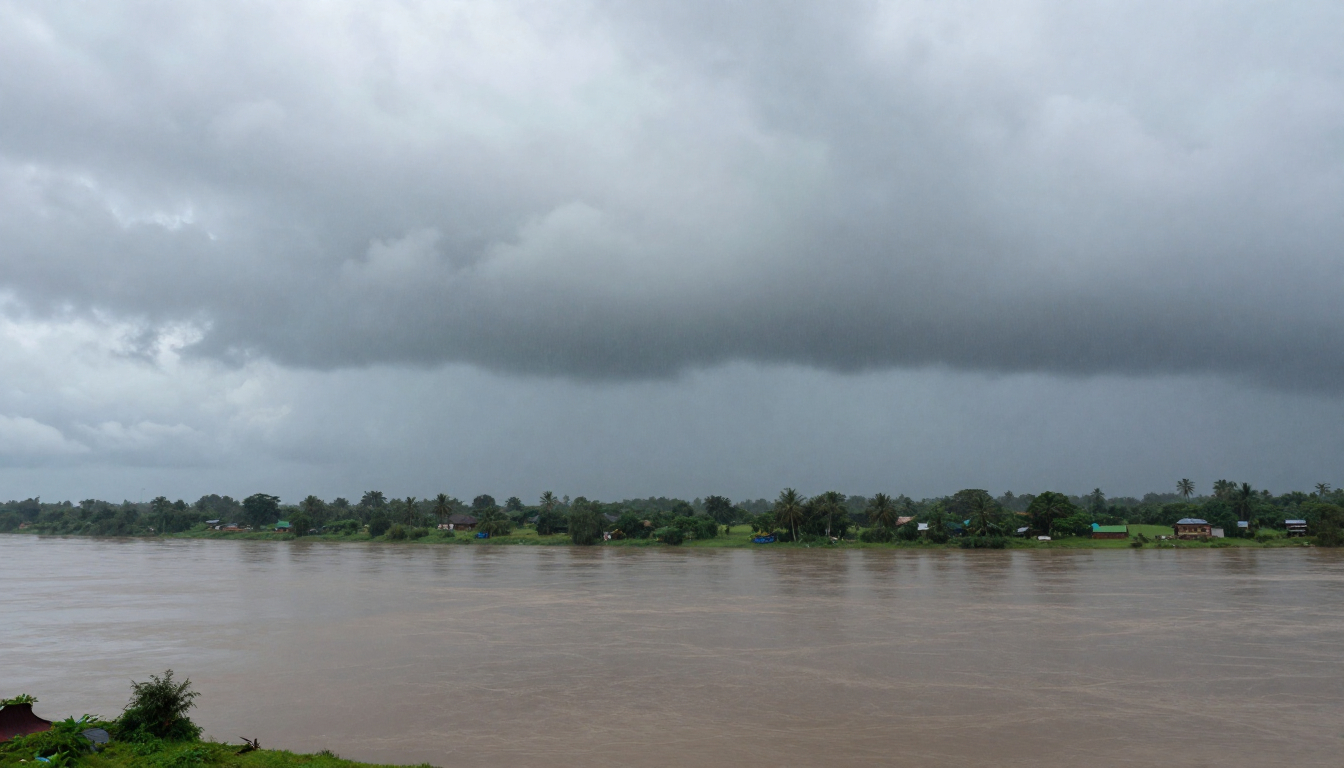
Researchers have identified 43 specimens of Pterygoplichthys disjunctivus — also known as the vermiculated sailfin catfish or “janitor fish” — in the Lohandra River, which flows through eastern Nepal into India. The findings, based on surveys between 2019 and 2023, were recently published in BioInvasions Records.
“This is the first confirmed presence of Pterygoplichthys in any Nepali river,” said Asmit Subba, zoologist at Tribhuvan University. “We still don’t know exactly how it got here.”
An Unusual Survivor
The janitor fish is well known in the aquarium trade for cleaning algae from tanks. Over decades, it has spread far beyond its South American home, appearing in waterways across Asia and North America.
One of its advantages is an ability to breathe air through its intestines, allowing it to survive in low-oxygen water — and even on land for hours. Its hard, patterned scales make it difficult for predators to kill, and it is not considered edible.
How Did It Arrive in Nepal?
In India, several Pterygoplichthys species have been reported in states bordering Nepal, including Bihar, Uttar Pradesh, and West Bengal. One theory is that the fish swam upstream into Nepal’s river systems. However, Subba notes that its limited distribution in the Lohandra raises doubts about that route.
Another possibility is human release. Some religious practices involve setting live fish free into rivers, often selecting hardy species that can survive transport. Yet, this explanation is complicated by the fact that the pet fish trade is more active in Nepal’s larger cities, not in the region where the fish were discovered.
Ecological Concerns
Hari Sharma, an associate professor of zoology at Tribhuvan University, warns that the absence of natural predators in Nepal’s rivers could allow the janitor fish to multiply rapidly. “They can easily outcompete native species,” he said.
Such effects have already been seen in India, where fishers have reported declining catches of local species in areas invaded by the catfish.
Nepal’s rivers are already home to other non-native fish. A 2020 USAID report listed 16 exotic species in the country, including Nile tilapia and rainbow trout, introduced for aquaculture. Smaller invaders, such as glass fish (Chanda nama), have also become widespread.
Weak Regulation and Climate Pressures
Experts point to the lack of rules for managing waste from aquariums and fish farms, as well as minimal controls on importing aquatic species. Without stronger measures, they warn, invasive species could continue to spread.
Climate change may make matters worse by enabling lowland fish to expand into higher-altitude rivers and lakes.
The Road Ahead
Subba and other researchers stress the need for immediate action. Awareness campaigns targeting fishing communities could help prevent further spread. “We must remove these fish whenever we find them,” Subba said. “Once they establish themselves, it’s very hard to get rid of them.”

 Nirajan Dahal