 admin
admin
Plastic pollution has become one of the most visible and widespread environmental crises of our time. From ocean depths to mountain peaks – and even in the rain we consume – plastic is everywhere. But the real problem lies not just in waste, but in production. As long as plastic production continues to rise, no amount of recycling will be enough to solve the crisis.
Public concern over the escalating plastic problem has been growing for years. In 2022, this momentum led to the launch of negotiations for a Global Plastics Treaty, a landmark process aimed at tackling plastic pollution from production to disposal. This treaty is a rare opportunity to address the problem at its source – by reducing how much plastic we make in the first place.
Why Reducing Production Is Essential
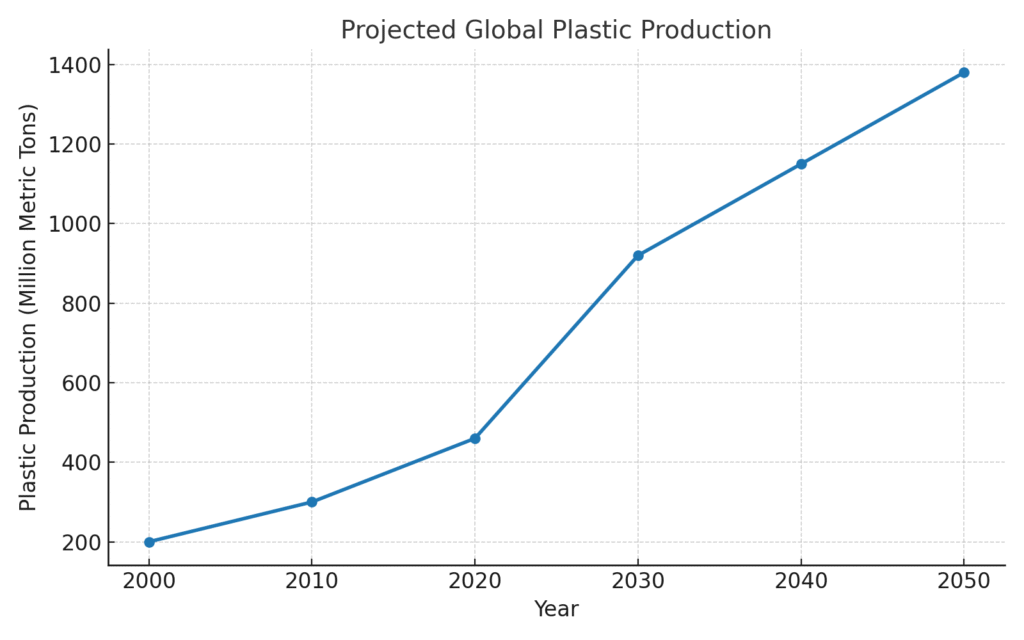
Plastic pollution cannot be solved simply through recycling or waste management. If production continues to rise, the problem will only worsen. Petrochemical companies are manufacturing more plastic each year, and over half of all plastics ever made have been produced since the year 2000. If current trends continue, production could double within the next 10–15 years and triple by 2050.
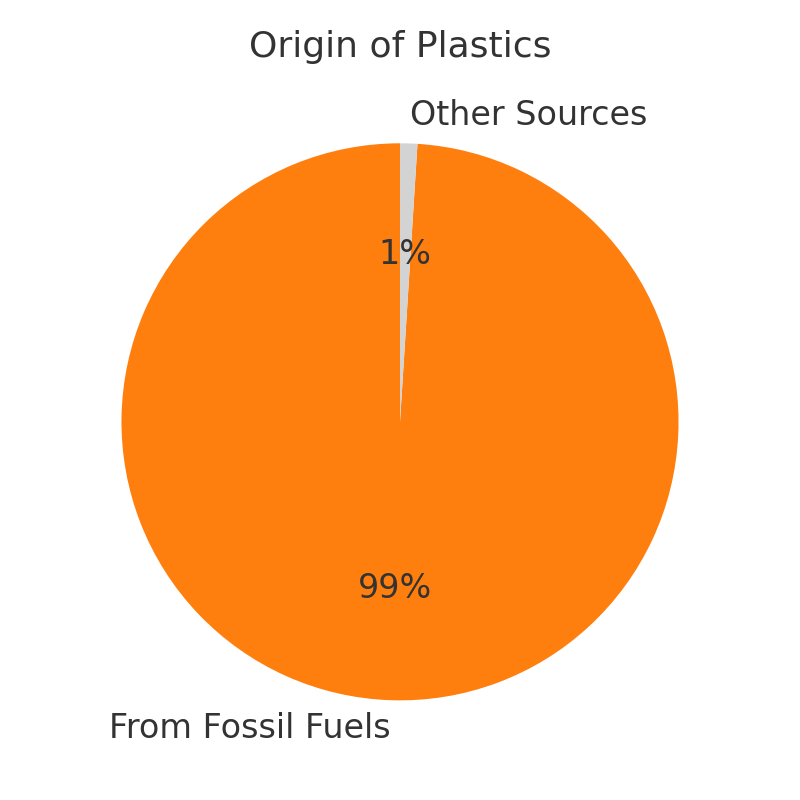
The climate connection is clear: 99% of plastics are made from fossil fuels. The single-use plastics manufactured in 2021 alone generated greenhouse gas emissions equal to the entire annual emissions of the United Kingdom – with most of these emissions coming from the production phase. This means that cutting plastic production is not just about reducing waste – it is also critical to keeping global temperature rise within the 1.5°C target and protecting biodiversity.
Greenpeace recommends that the Global Plastics Treaty set a legally binding target to cut global plastic production by at least 75% by 2040, based on 2019 levels. Such a target would give us the best chance of avoiding climate catastrophe and protecting natural ecosystems.
What the Public Thinks
A new international survey of over 19,000 people across 19 countries shows overwhelming support for bold action:
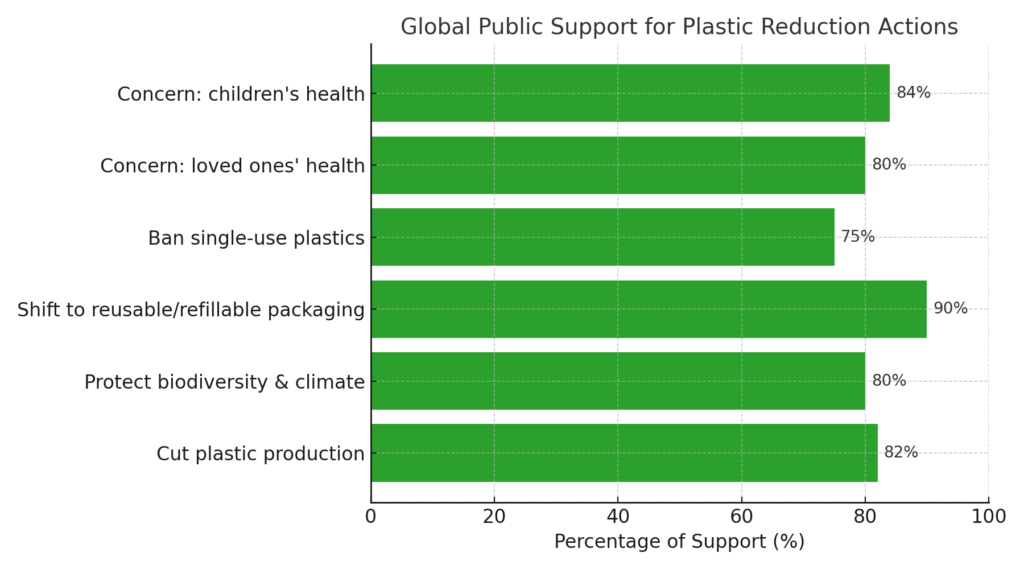
- 82% support cutting plastic production.
- 80% support reducing production to protect biodiversity and the climate.
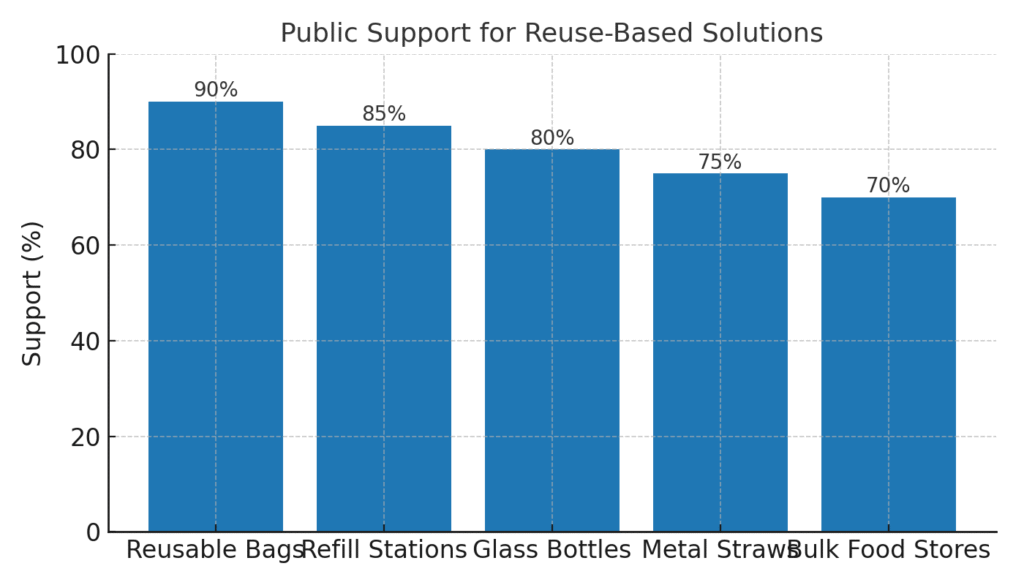
- 90% want to replace single-use packaging with reusable and refillable alternatives.
- 75% support banning single-use plastics entirely.
- 80% are concerned about the health impacts of plastics on loved ones.
- 84% of parents are worried about impacts on their children.
Support is strong in every region surveyed, with particularly high agreement in Global South countries where plastic waste levels are most severe. Even the lowest level of agreement – 60% – was for the statement that fossil fuel and chemical industry lobbyists should be excluded from treaty negotiations.
The Call to Action
These survey results send a clear signal to governments negotiating the Global Plastics Treaty: people want leaders to take decisive action to address plastic pollution throughout its life cycle. That means cutting production, banning single-use plastics, and shifting to reuse-based systems.
Failing to act risks not only worsening environmental and health damage – but also losing public trust. The treaty must stand up to the fossil fuel industry and protect the health of communities, the climate, and biodiversity for generations to come.


 Nirajan Dahal