 Nirajan Dahal
Heatwaves are no longer just uncomfortable – they may be quietly accelerating how fast our bodies age. New research tracking thousands of people over 15 years shows that repeated exposure to extreme heat can increase biological age, adding to long-term health risks in ways similar to smoking or poor diet.
A study that shifts the conversation
We already know that extreme heat can trigger short-term spikes in illness and early deaths. What has been missing is a clear picture of the longer-term toll on the body. New research published in Nature Climate Change argues that we have been underestimating that toll. The authors describe a genuine shift in understanding. Heat does not only cause immediate stress. It appears to push our bodies to age faster.
How the research was done
Scientists followed about twenty-five thousand adults in Taiwan for fifteen years. That size and time span make this one of the first studies able to connect repeated heatwave exposure with long-term changes in biological age. Biological age is different from the age on your passport. It is a composite marker of overall health, derived from routine medical measures such as blood pressure, inflammation, cholesterol, and organ function.
The team compared how often people experienced heatwave days with changes in their biological age over time.
What the numbers say
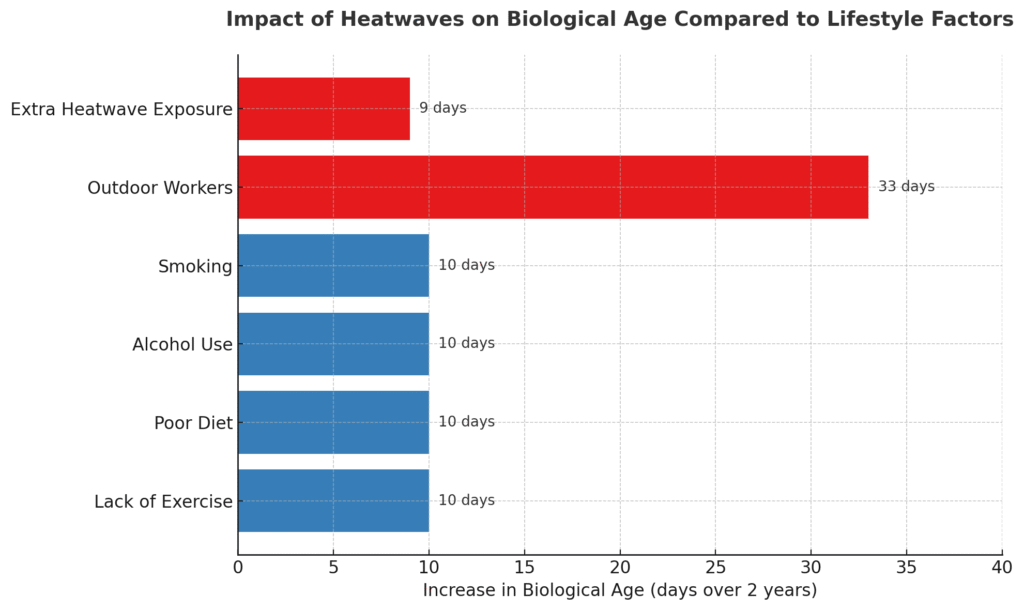
The pattern was clear. People who went through four additional heatwave days across two years showed an average increase of about nine days in biological age. The effect was stronger in manual workers who tend to spend more time outdoors. In that group, biological age rose by thirty-three days.
In practical terms, the damage landed in the same range as well known lifestyle risks. The researchers note that the ageing effect from repeated heatwaves is broadly comparable to harms linked to smoking, alcohol use, unhealthy diet, or limited exercise.
Why this matters over a lifetime
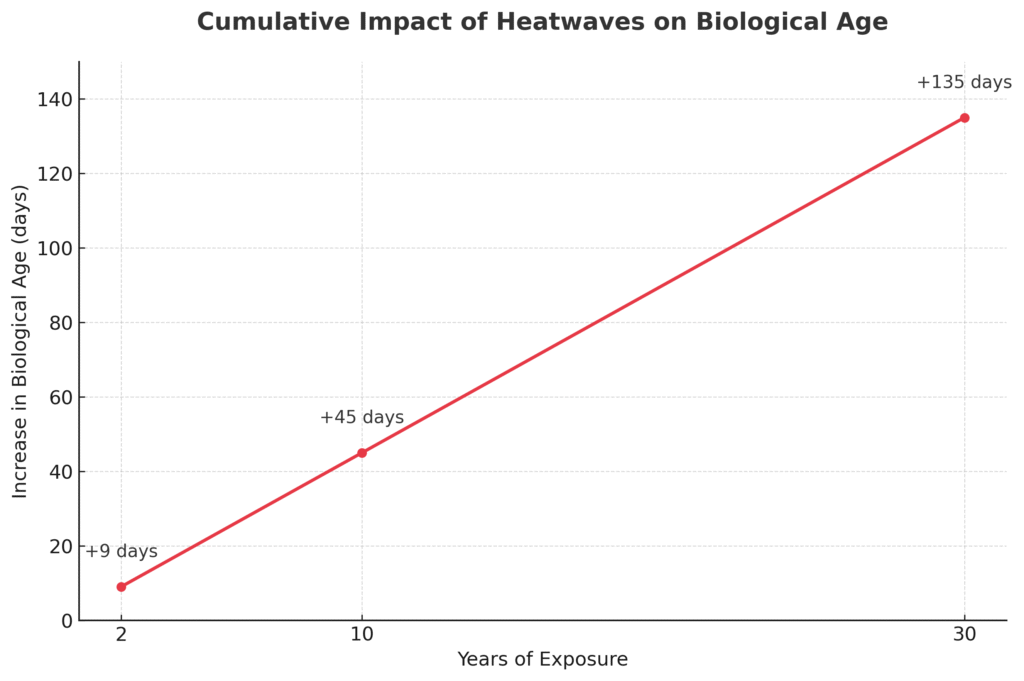
Nine days over two years may sound trivial. The researchers caution against reading it that way. If exposure continues to build over decades, the additional ageing compounds. Since heatwaves affect entire communities at once, the population-wide impact could be large. This matters because higher biological age is a strong predictor of earlier death.
A warming world raises the stakes
Heatwaves are already arriving more often and lasting longer as the climate crisis intensifies. Fossil fuel burning, the main driver of that crisis, reached record levels in 2024. If that trend continues, the health impacts described in this study are likely to grow.
What might be happening inside the body
The study did not pin down a single cause. The link between heat and faster ageing is strong, yet the mechanism is still being mapped. Damage to DNA is a leading suspect. Another important observation from the data is that total heatwave days matter most. The more hot days you live through, the more your biological age seems to creep upward.
Signals that people try to adapt
There was some good news. Over the fifteen years, the harmful effect of heatwaves appeared to lessen slightly, suggesting that people were taking more steps to cope. Spending time in shade, avoiding the hottest hours, and using air conditioning where available are all plausible reasons. Even so, the effect on ageing remained significant.
Who was studied and why that matters
Participants were adults enrolled in a paid health management plan. On average, they were younger, healthier, and more educated than the general population. This is important context. Older adults and those with existing illnesses are more vulnerable to heat. The true impact on ageing in those groups is likely larger than what this study captured.
The analysis accounted for body weight, smoking and exercise habits, pre-existing conditions including diabetes and cancer, and the typical level of air conditioning use in each person’s neighbourhood. Some useful details were not available. The dataset did not include precise time spent outdoors, the cooling quality of each home, or individual air conditioner use. Future studies should fill those gaps.
Expert views
Lead researcher Dr Cui Guo from the University of Hong Kong emphasised that the headline numbers probably understate the lifetime burden. If heatwave exposure keeps stacking up over decades, the effect on health could far exceed what was observed within the study window. Dr Guo also noted that heatwaves are becoming more frequent and longer, which points to greater health risks ahead.
Professor Paul Beggs of Macquarie University, who was not part of the team, underscored how this changes our assumptions. Many people think they have lived through heatwaves without lasting harm. This evidence suggests otherwise. He also drew a line to another finding from 2024 that early-life heat exposure can alter the development of white matter in the brain. In other words, heat can affect us at any age and the consequences can be lifelong.
How this fits with other research
The results align with a recent United States study showing that outdoor heat accelerates ageing in older adults. They also sit alongside a 2023 analysis in the United States that found high exposure to extreme heat was linked with faster cognitive decline for Black people and for residents of poorer neighbourhoods. Together, these strands point to a consistent story. Heat is not only an immediate hazard. It is a long-term stressor that can deepen health inequities.
What this means for policy and daily life
For policymakers, the message is straightforward. Heat action plans should not be limited to emergency response days. They should also aim to lower total heat exposure across seasons and years. That includes cool roofs and shaded streets, reliable access to cooling for vulnerable households, workplace protections for outdoor and manual workers, and clear public guidance during heat events.
For individuals, sensible steps still matter. Track heat alerts, prioritise shade and hydration, avoid the hottest hours where possible, cool indoor spaces effectively, and check on vulnerable neighbours and family members. Small actions will not end the climate crisis, yet they can reduce the cumulative heat load on your body.
The bottom line
Repeated heatwaves appear to push our bodies to age faster. The effect is measurable, it builds with total exposure, and it is on the same scale as other major lifestyle risks. In a world with more extreme heat, protecting people from that cumulative burden is not optional. It is a public health imperative.